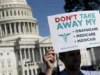
The enactment of a major federal tax-and-spending law has intensified debate over Medicaid funding, health insurance access and the responsibility of lawmakers who voted to approve the legislation.
The United States enacted a sweeping federal law on July 4, 2025, introducing significant changes to federal spending and public benefit programs. Known as the One Big Beautiful Bill Act, the legislation includes provisions affecting Medicaid, health insurance coverage and the administration of government-funded healthcare. Its passage has prompted questions about how the changes could affect millions of Americans and what the congressional voting record reveals about political responsibility for the law.
The legislation passed the House of Representatives on July 3, 2025, by a vote of 218 to 214. All 218 affirmative votes came from Republican representatives, while 212 Democrats and two Republicans voted against the measure. The Senate had approved the bill earlier, on July 1, with Vice President JD Vance casting the deciding vote after the chamber divided 50–50. The official records provide a clear account of how lawmakers voted on the final legislation.
Medicaid Changes at the Center of the Debate
Medicaid is a joint federal and state healthcare program that serves eligible low-income individuals and families, children, pregnant women, older adults and people with disabilities. The new law changes aspects of the program’s eligibility verification, introduces work or community-engagement requirements for certain adults, and modifies federal funding arrangements.
Supporters of the legislation argue that these changes could strengthen program oversight, reduce improper payments and encourage qualifying beneficiaries to participate in employment or other approved activities. They also maintain that federal spending needs greater scrutiny and that public programs should operate under clearer eligibility rules.
Opponents, however, warn that additional documentation requirements and administrative procedures could make it more difficult for eligible people to maintain coverage. Individuals who qualify for benefits may struggle to meet reporting deadlines, obtain the required paperwork or navigate changing state procedures. As a result, critics argue that some people could lose insurance even when they remain eligible under the program’s underlying rules.
Federal Estimates Point to Potential Coverage Losses
The Congressional Budget Office, a nonpartisan federal agency, evaluated the legislation’s potential impact on healthcare coverage. Its June 2025 analysis of the House-passed version estimated that the bill’s provisions would increase the number of uninsured Americans by approximately 10.9 million in 2034 compared with the applicable baseline.
A separate estimate focused on the Medicaid provisions in the House-passed bill projected that those provisions alone would increase the uninsured population by approximately 7.8 million in 2034. These estimates cover different scopes of analysis and should not be combined or treated as interchangeable figures.
The projections describe potential future effects rather than the number of people who have already lost insurance. The eventual outcome will depend on implementation, state-level decisions, administrative practices and how beneficiaries respond to the new requirements. Future enrollment reports and spending data will be essential to determine the actual consequences.

Potential Effects on Families and Healthcare Providers
For families who depend on Medicaid, continued access to insurance can influence whether they obtain preventive care, prescription medicines, specialist appointments and treatment for chronic conditions. When coverage is lost or becomes more difficult to maintain, some patients may postpone medical appointments because they cannot afford the cost of care.
Healthcare providers could also face financial challenges if more patients become uninsured. Hospitals, community clinics and other facilities that treat large numbers of Medicaid recipients may experience higher uncompensated-care costs. The extent of the pressure will vary by region, provider finances and the availability of other funding sources.
Rural communities deserve particular attention because some have limited access to hospitals, specialists and alternative healthcare facilities. If local providers experience financial difficulties, patients may need to travel farther for treatment. The law includes funding intended to support rural healthcare providers, but the degree to which that funding offsets other pressures will depend on how the program is implemented and distributed.
Why the Congressional Voting Record Matters
The debate extends beyond the financial details of the legislation to the responsibility of elected officials. Members of Congress vote on laws that establish national policy, allocate public funds and influence access to government services. Official roll-call records allow the public to see which lawmakers supported the final measure and which opposed it.
The House clerk’s published voting record identifies the representatives who voted on final passage. The Senate’s official record provides the corresponding information for senators. These primary sources are more reliable for determining individual votes than a social media graphic, a campaign statement or an unsourced list circulating online.
Readers should distinguish between voting for the overall bill and endorsing every individual provision within it. H.R. 1 was a broad legislative package covering multiple policy areas. A lawmaker’s vote for the package establishes support for its passage, but does not, by itself, explain that lawmaker’s position on every healthcare provision or the reasons behind the vote.

Does the Law Represent the Largest Healthcare Cut in American History?
The legislation has been described in public debate as the largest healthcare cut in American history. Assessing that characterization requires a consistent comparison with earlier federal laws. Analysts would need to examine the same period, spending baseline, definition of healthcare spending and treatment of related tax provisions.
There is substantial evidence that the law is projected to reduce federal healthcare spending and affect insurance coverage. However, the official congressional vote does not independently establish a historical record. Responsible reporting should explain the budget estimates and their assumptions rather than present a disputed historical superlative as an uncontested fact.
What Happens Next?
Implementation will determine how the law’s provisions translate into real-world outcomes. Federal agencies must issue guidance where required, states must adapt their administrative procedures, and healthcare organizations will need to monitor changes in enrollment, reimbursement and patient demand.
Several indicators will help establish the effects over time: Medicaid enrollment, the number of uninsured residents, federal and state healthcare expenditures, hospital financial performance and access to care in underserved communities. Comparing these outcomes with prior trends will help policymakers and the public assess whether the projected consequences are occurring as expected.
The legislation’s long-term significance will depend not only on its fiscal savings but also on its effects on families, state governments and healthcare delivery. The official voting records provide an essential starting point for public accountability, while independent budget estimates and subsequent implementation data will be needed to evaluate the law’s broader impact.
For Americans concerned about healthcare policy, examining the legislation itself, the available budget projections and the individual congressional votes offers a more complete picture than relying on a single social media claim. The central question is how the law’s changes will affect federal spending, insurance coverage and access to medical care as its provisions take effect.